
Days / Nights
9 Days – 8 Overnights
Tour Highlights
ISTANBUL
HAGIA SOFIA
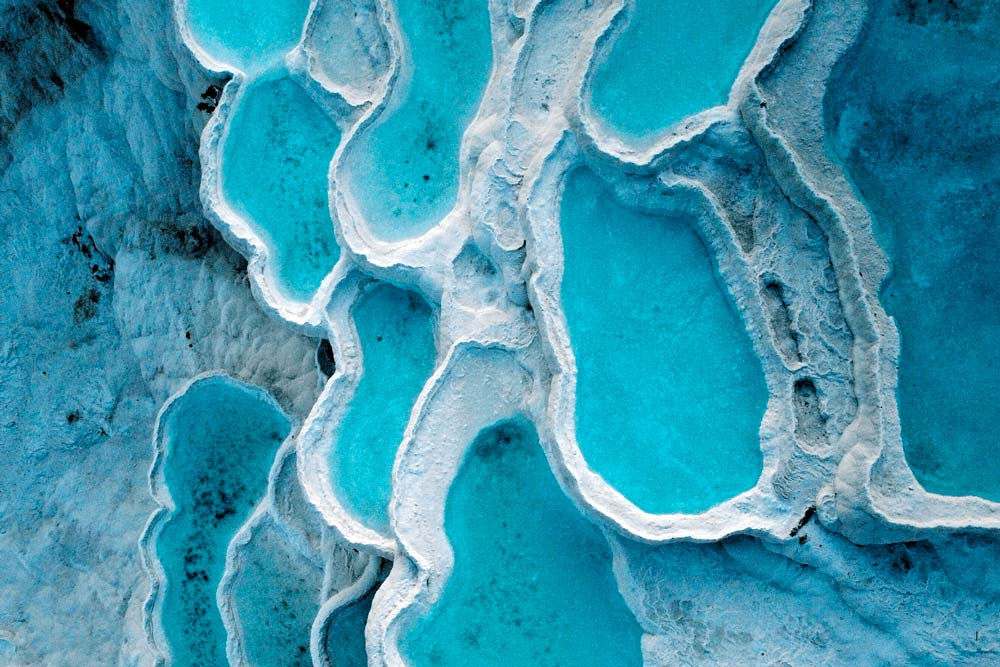
PAMUKKALE
PHILADELPHIA
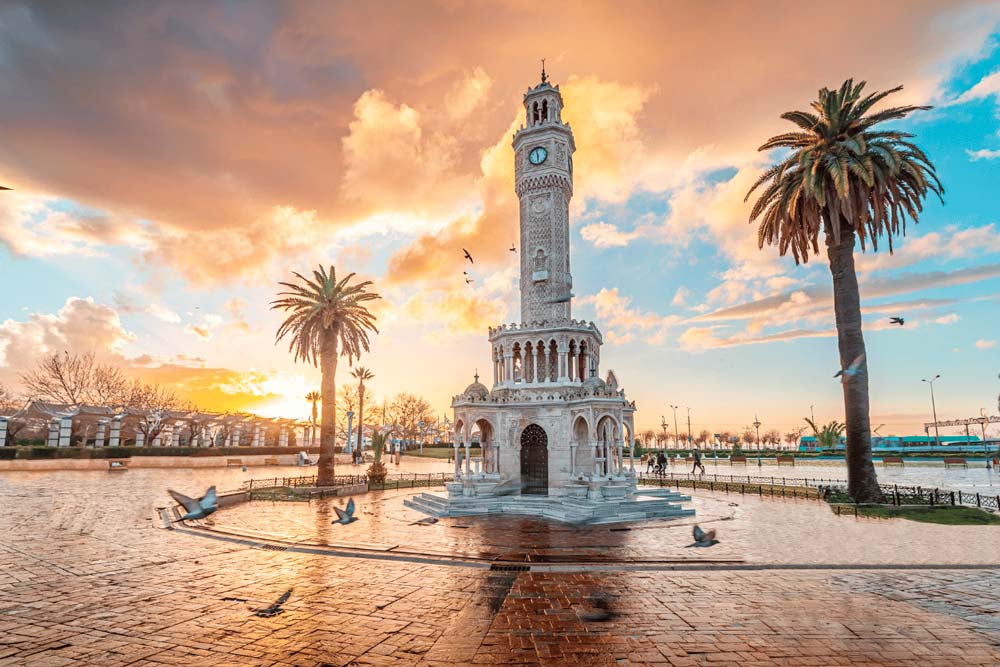
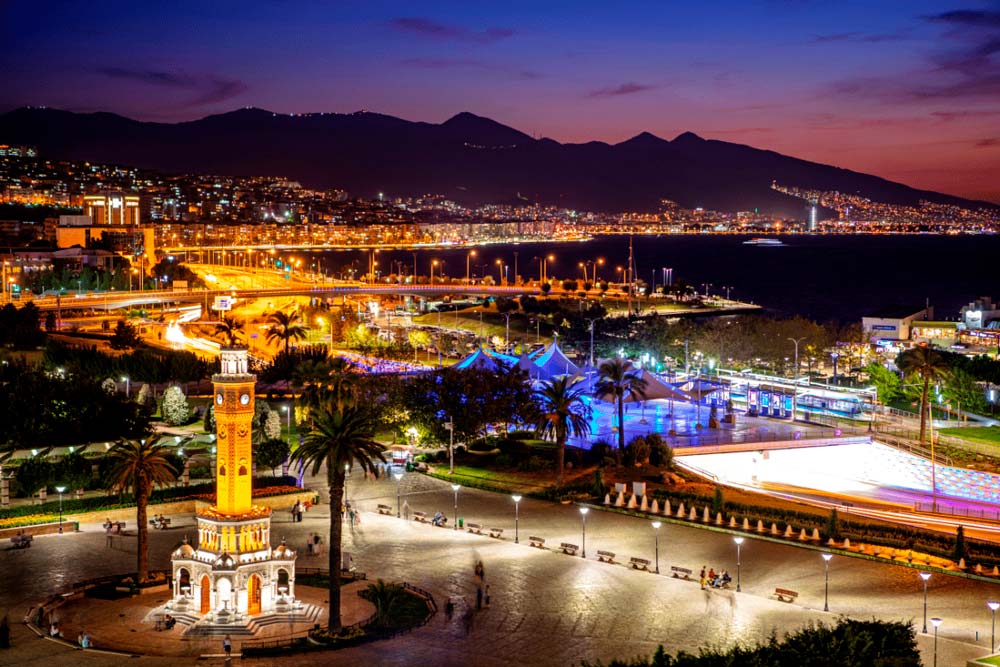
IZMIR
KUSADASI
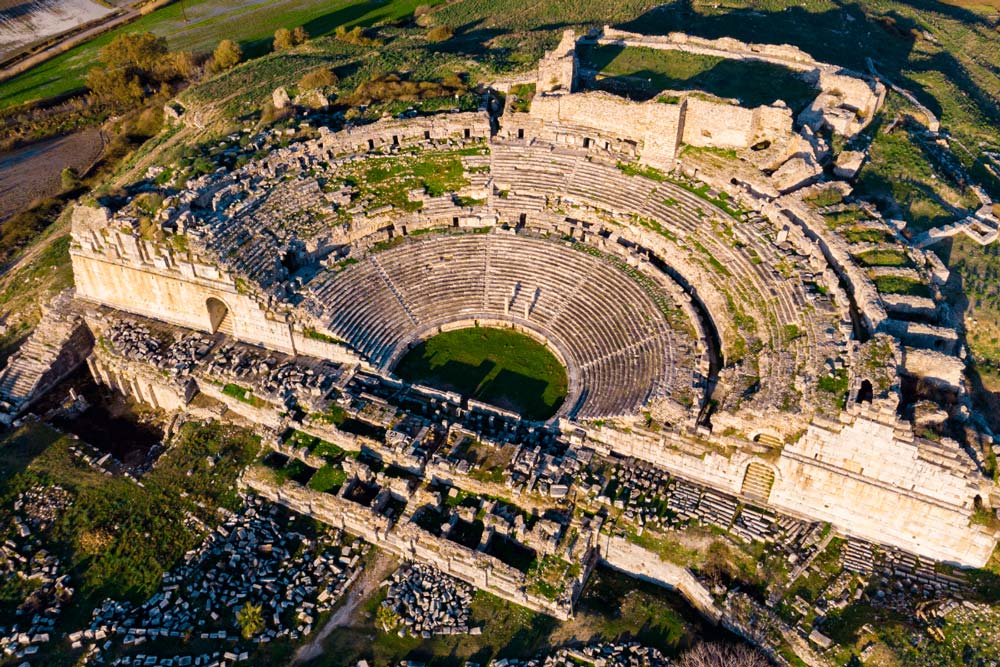
MILETUS
Day 1 | Arrival at Istanbul Airport – Istanbul
Overnight Arrival in Istanbul Airport, Turkey. Upon landing, we will transfer directly to our hotel. After checking in at the hotel and taking a short time to rest, we will conclude our long travel day with a delicious dinner. Overnight stay.

Day 2 | Istanbul – Hagia Sophia – Istanbul Overnight
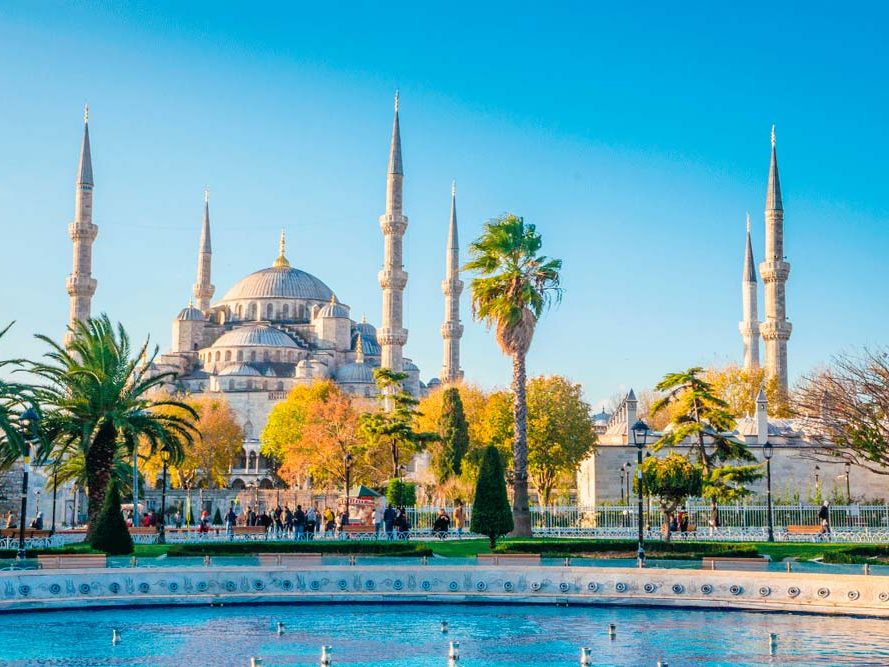
After breakfast, we will begin our first day in the historic city of Istanbul at the magnificent Hagia Sophia (the Church of “Holy Wisdom”). This architectural masterpiece was the crowning achievement of Emperor Justinian’s sacred building program in the 6th century, during the height of the Christian Byzantine Empire. Its vast, light-filled interior—dominated by a grand dome ringed with windows—remains one of the most awe-inspiring sacred structures ever built. We will then visit the Blue Mosque, constructed between 1609 and 1616, intended to rival the beauty and grandeur of the Hagia Sophia. Inside, the famous blue-and-white Iznik tiles glow in the light streaming through 260 windows. Next, we head underground to the Basilica Cistern, an enormous ancient reservoir hidden beneath the city. Supported by 336 columns standing over 26 feet tall, the cistern features elevated walkways accompanied by the echo of dripping water and gentle classical music, making it one of Istanbul’s most atmospheric and unusual attractions. Our final stop will be the Grand Bazaar, a sprawling maze of covered streets, colorful vaulted ceilings, and thousands of small shops. Here, lively merchants enthusiastically vie for your attention as you explore one of the world’s oldest and largest markets. Dinner and overnight stay.
Day 3 | Istanbul – Istanbul Overnight
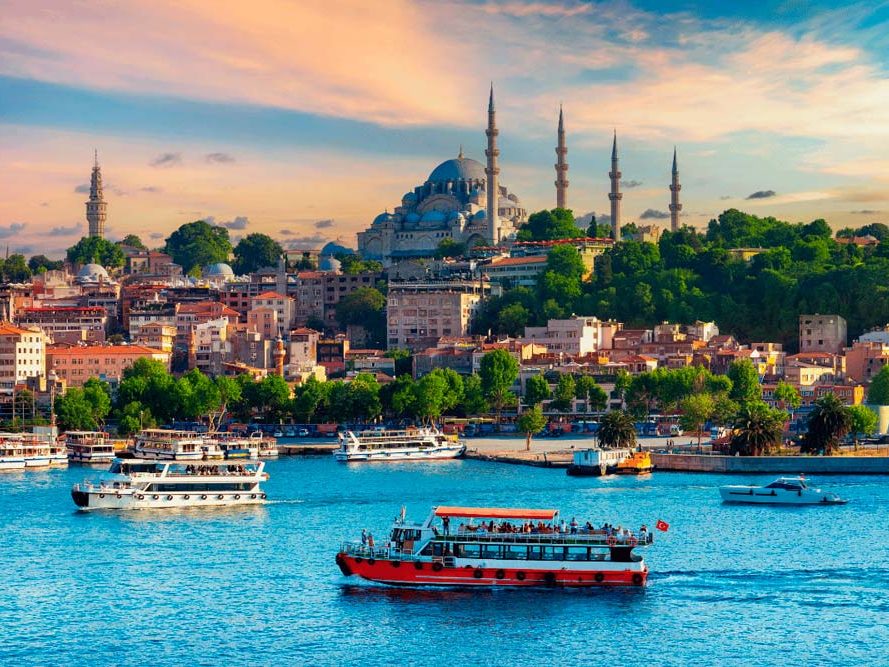
Our day begins with a visit to the Archaeological Museum, home to remarkable artifacts from across Turkey. We then continue to the Church of St. Savior in Chora. Originally built in the 11th century and richly decorated in the 14th, it contains one of the finest and best-preserved collections of Byzantine mosaics and frescoes in the world. Next, we will visit Topkapi Palace. This expansive complex of courtyards, gardens, and buildings—initiated in the 15th century and enlarged over the centuries— now serves as a museum housing significant treasures and artifacts from the Ottoman Empire. Later, we will enjoy a scenic Bosphorus cruise, offering a relaxing way to admire many of Istanbul’s most iconic landmarks lining both the European and Asian shores. We will then return to our hotel for dinner and overnight stay
Day 4 | Istanbul – Denizli – Pamukkale Overnigh
After breakfast, we will be transferred to Istanbul Airport for our flight to Denizli. Upon arrival, we will begin our day with visits to Colossae, Hierapolis, and Laodicea. Our first stop, Colossae, will be brief, as the site has not yet been excavated. Nevertheless, it holds great significance for Christians, as Paul addressed two letters here – one to the church of Colossae and another to Philemon, a wealthy Christian and slave owner who hosted the local church in his home. We then continue to Hierapolis. Famous in antiquity for its thermal hot springs – renowned for their healing properties – and for its stunning white travertine terraces, Hierapolis remains as captivating today as in biblical times. The ancient ruins are equally impressive and include the Arch of Domitian, a colonnaded street and marketplace, Roman baths, a 20.000-seat theater built in 200 BC, and the largest ancient necropolis in Anatolia, with more than 1.200 tombs, tumuli, and sarcophagi. We will also visit the Martyrium of St. Philip, a 5th-century structure marking the site where Philip – either the apostle or the evangelist – was believed to have been martyred in 80 AD. Arrival at our hotel in Pamukkale. Dinner and overnight stay.
Day 5 | Laodicea – Philadelphia – Sardis – Izmir Overnight
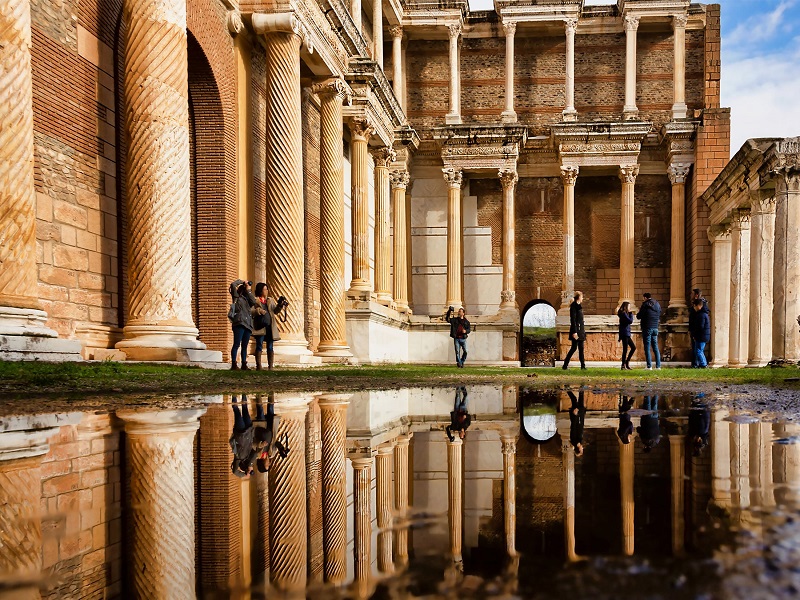
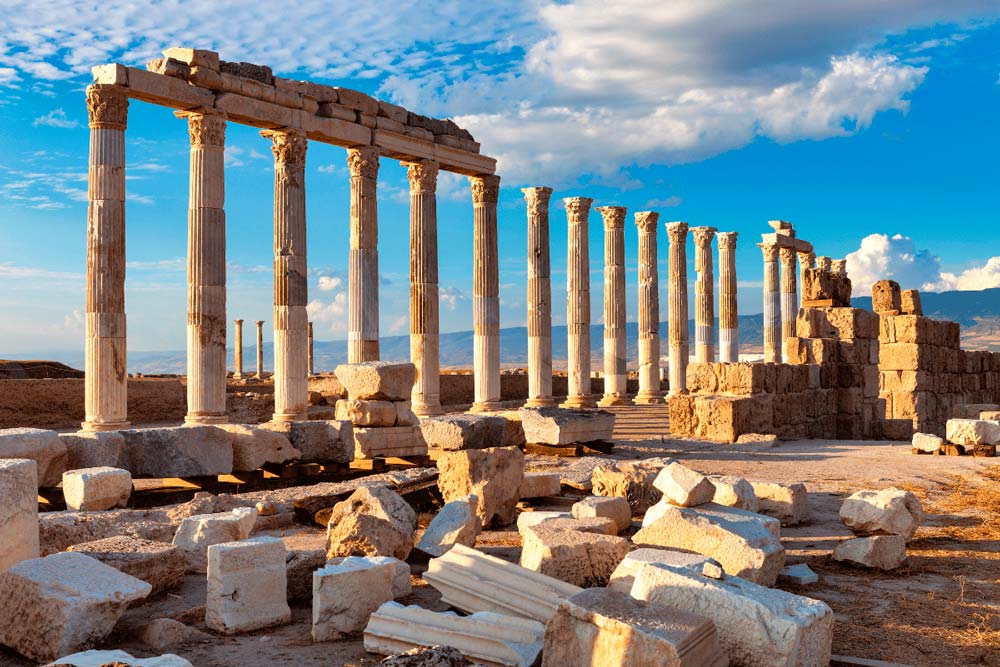
We will begin the day by visiting the third of the key biblical cities in the Lycus Valley: Laodicea. Although excavations are still in their early stages, the scale of the site featuring two theaters, a stadium, an aqueduct, and a major colonnaded street lined with shops – reveals its importance during Roman times. Laodicea is the last of the seven churches addressed by John in the Book of Revelation (Rev. 3:14–22). It maintained close ties with the nearby churches of Colossae and Hierapolis (Col. 4:13–15) and even received one of Paul’s now-lost letters (Col. 4:16). Our next stop is the ancient city of Philadelphia. Much of the ancient site has been destroyed or remains buried beneath the modern town, which lies in an earthquake-prone region. John wrote to the church here (Rev. 3:7–13), praising their steadfast endurance amid persecution and promising that they would become “a pillar in the temple of my God”. We will then continue to Sardis (Rev. 3:1–6). Here we will see the remains of the grand Temple of Artemis, the beautifully reconstructed gymnasium and Roman baths, the largest known synagogue outside of Palestine, and Byzantine-era shops – all evidence of a thriving and long-standing Christian community. We end the day in the port city of Izmir, known in antiquity as Smyrna and now Turkey’s third-largest city. After dinner, you will have free time to stroll along the scenic waterfront promenade that lines the harbor. Dinner and overnight stay in Izmir.
Day 6 | Izmir – Pergamum – Thyatira – IzmirOvernight
We will begin the day by driving up to Mount Pagus, known today as Kadifekale, the acropolis of ancient Smyrna. From here, we enjoy a sweeping view of modern Izmir and its harbor. At this site, we reflect on John’s words of encouragement to the Christians in Smyrna, who remained faithful despite persecution (Rev. 2:8–11). We also remember the martyrdom of Polycarp – John’s disciple and later the bishop of Smyrna – who was burned alive in 155 AD at the age of 86 for refusing to renounce Christ. We then travel north to Pergamum, one of the most striking archaeological sites in Turkey. ts highlights are hard to match: a 10,000-seat theater that is the steepest in the ancient world, the magnificently restored Temple of Trajan, a once-great library of 200,000 volumes second only to Alexandria’s, and the massive base of the Altar of Zeus – now relocated and reconstructed in the Pergamon Museum in Berlin. John warned the church in this city that they lived where “Satan’s throne” was set (Rev. 2:12–17). If time allows, we will make a brief stop in ancient Thyatira. Because the modern city of Akhisar covers much of the site, only limited archaeological remains have been uncovered. John admonished this church for tolerating a woman symbolically called Jezebel, who was leading believers astray and encouraging them “to practice sexual immorality and to eat food sacrificed to idols” (Rev. 2:18–29). Return to our hotel for dinner and overnight stay.
Day 7 | Ephesus – Kusadasi Overnight
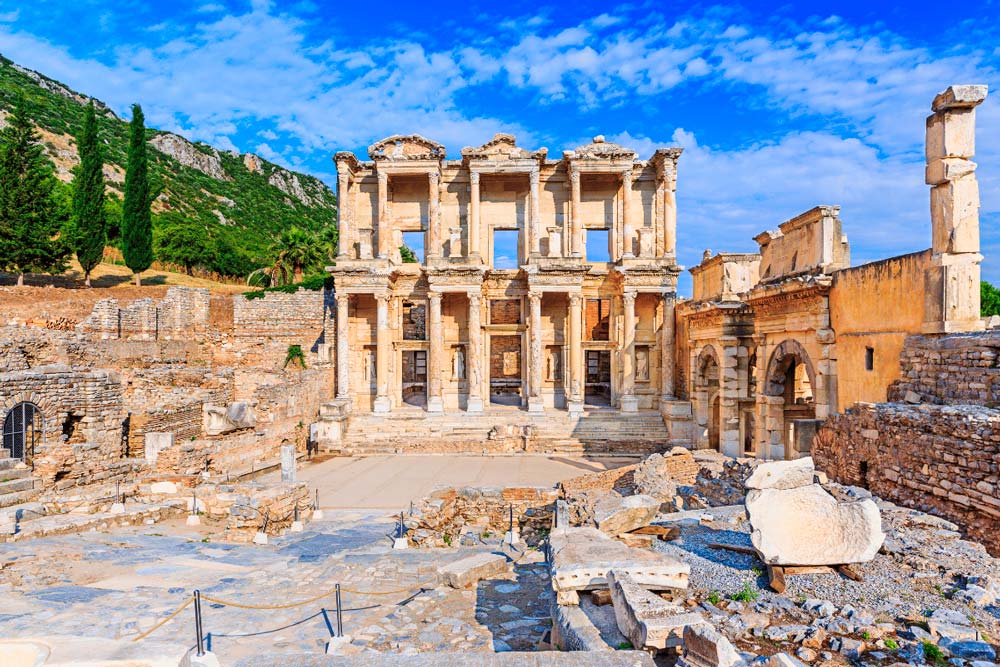
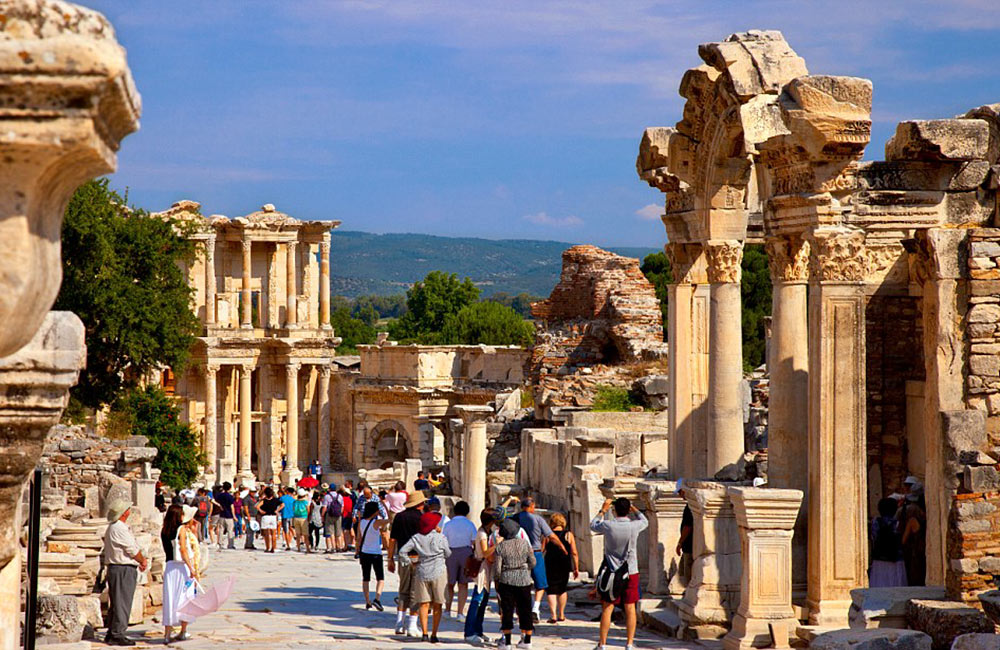
Today will likely be the highlight of our tour as we visit the most impressive biblical site of our trip: Ephesus. Once one of the most beautiful cities of the ancient world, its former glory is still clearly visible in its well-preserved streets, temples, fountains, public baths, terraced houses, and theaters. Ephesus was also home to the Temple of Artemis, one of the Seven Wonders of the Ancient World. We will stand in the very theater where some 24,000 citizens once gathered, shouting “Great is Artemis!” during the riot sparked by Paul’s ministry. The Apostle Paul visited the city only briefly during his second missionary journey (Acts 18:18–21), but returned on his third journey for a much longer stay of two years and three months (Acts 19:1–20:1). Timothy later served as pastor here, during which time Paul wrote his two letters, 1 and 2 Timothy. Ephesus also became the home base for the Apostle John’s ministry, from where he wrote 1, 2, and 3 John, and to which he addressed the Book of Revelation. In addition to the ancient city itself, we will also visit the Terrace Houses, the Ephesus Museum – which contains many remarkable artifacts from the site – and the Basilica of St. John. We will end the day with dinner and overnight stay in the nearby port city of Kusadasi
Day 8 | Miletus – Didyma – Priene – Kusadasi Overnight
After breakfast, we take a short drive to Miletus. Thanks to its four harbors and strategic location on the Aegean coast of Asia Minor, it was one of the great commercial cities of the ancient world. Of the surviving structures, the most remarkable is the 15,000-seat theater, originally built during the Hellenistic period and later expanded in Roman times. Other notable buildings include the bouleuterion, constructed during the reign of the infamous Antiochus IV (175–164 BC), the Sacred Road leading to the Temple of Apollo in nearby Didyma, the gymnasium, and the well preserved Baths of Faustina, dating back to AD 43. Paul visited Miletus on the return leg of his third missionary journey, where he summoned the elders from Ephesus to meet him and deliver his heartfelt farewell address (Acts 20:17–35). Some ten miles away, connected by the Sacred Road, lies Didyma, not a city but a major religious sanctuary devoted to Apollo. The magnificent temple here once featured 122 columns, each six feet in diameter and rising some six stories high. While only three full columns remain today, the surviving ruins still hint at the temple’s grandeur, which rivaled the famous Temple of Apollo at Delphi and its renowned oracle. Nearby Priene is distinctive not only for its cliffside location but also for its streets laid out in a regular grid, following the Hippodamian model of city planning – a stark contrast to the irregular, sprawling layouts of most ancient cities. Those who climb to Priene are rewarded with several impressive structures, including the Temple of Athena, built in the 4th century BC and considered one of the greatest achievements of Ionian architecture. Its construction was supervised and funded by Alexander the Great, who resided here during the lengthy siege of Miletus. The theater, though smaller than Miletus, is striking, as is the large council chamber. In the late afternoon, return to Kusadasi for dinner and overnight stay.
Day 9 | Departure Izmir Airport Transfer to Izmir Airport.
We hope that your journey tracing Paul’s Missionary Journeys in Turkey and visiting the Seven Churches of Revelation has been both enlightening and inspiring, leaving you with lasting memories to cherish!
We present you various proposals of excursions but also we can customize our services “depending on your needs”